Where kimono comes from
The garment is older than the name. Kimono, 着物, simply meant “a thing worn.” After Western dress entered schools and offices in the Meiji period, people needed a word that separated this wrap, with its overlapping collar and obi, from yōfuku, Western clothes.
The shape goes back to the kosode of the Heian period. That narrower sleeve began as an underlayer and later became outer dress. In the Edo period, yuzen dyeing, embroidery and the tied obi made the kimono a public garment. Pattern, status and season could all sit on one robe.
After Meiji, daily and official life moved toward Western clothes. Kimono stayed for weddings, coming-of-age, tea, festivals, and cities such as Kyoto where the street and the clothes are looked at together. What visitors rent for walking is usually komon, homongi, or a summer yukata. It is not a samurai uniform and it is not a wedding kurotomesode.
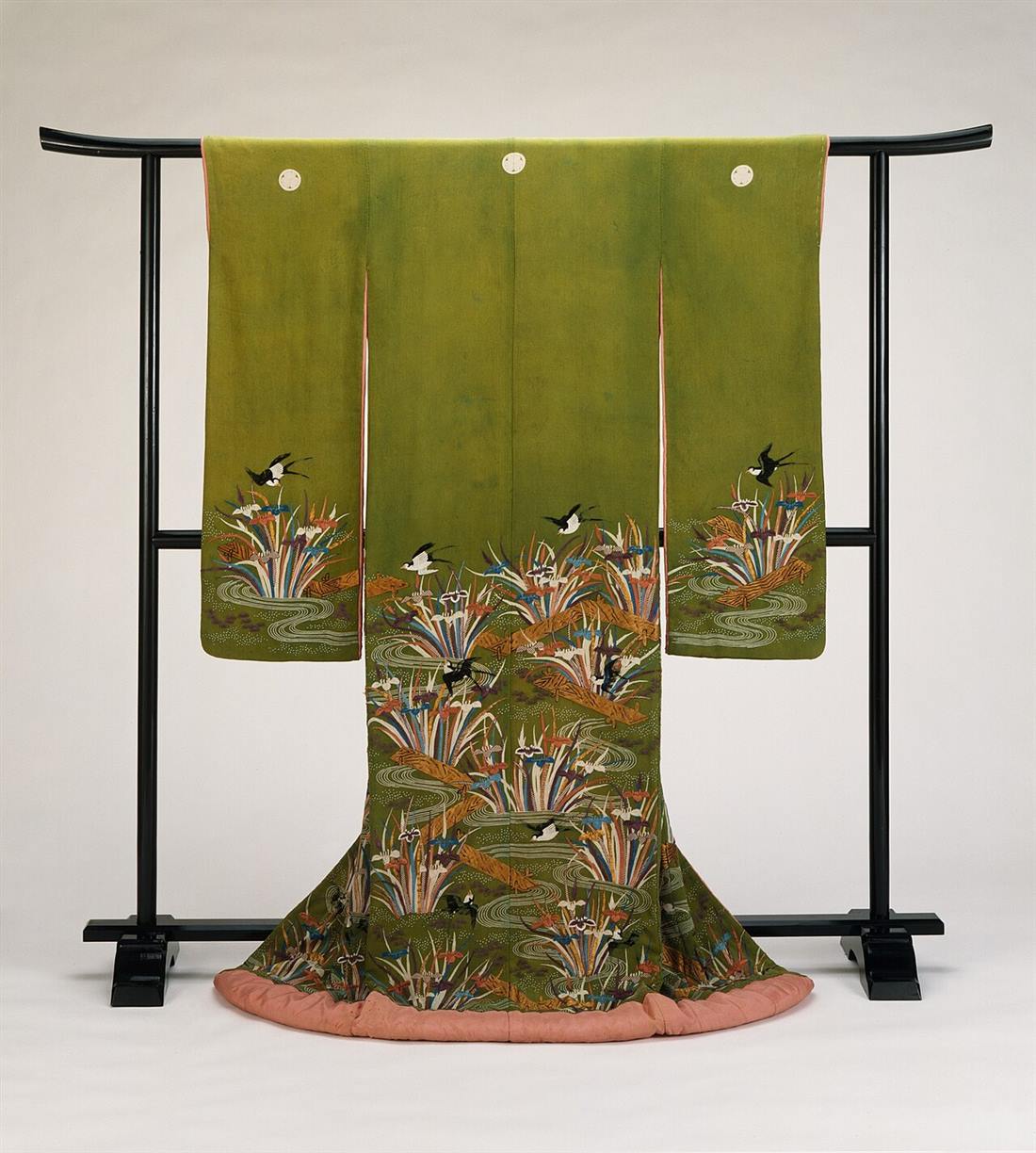
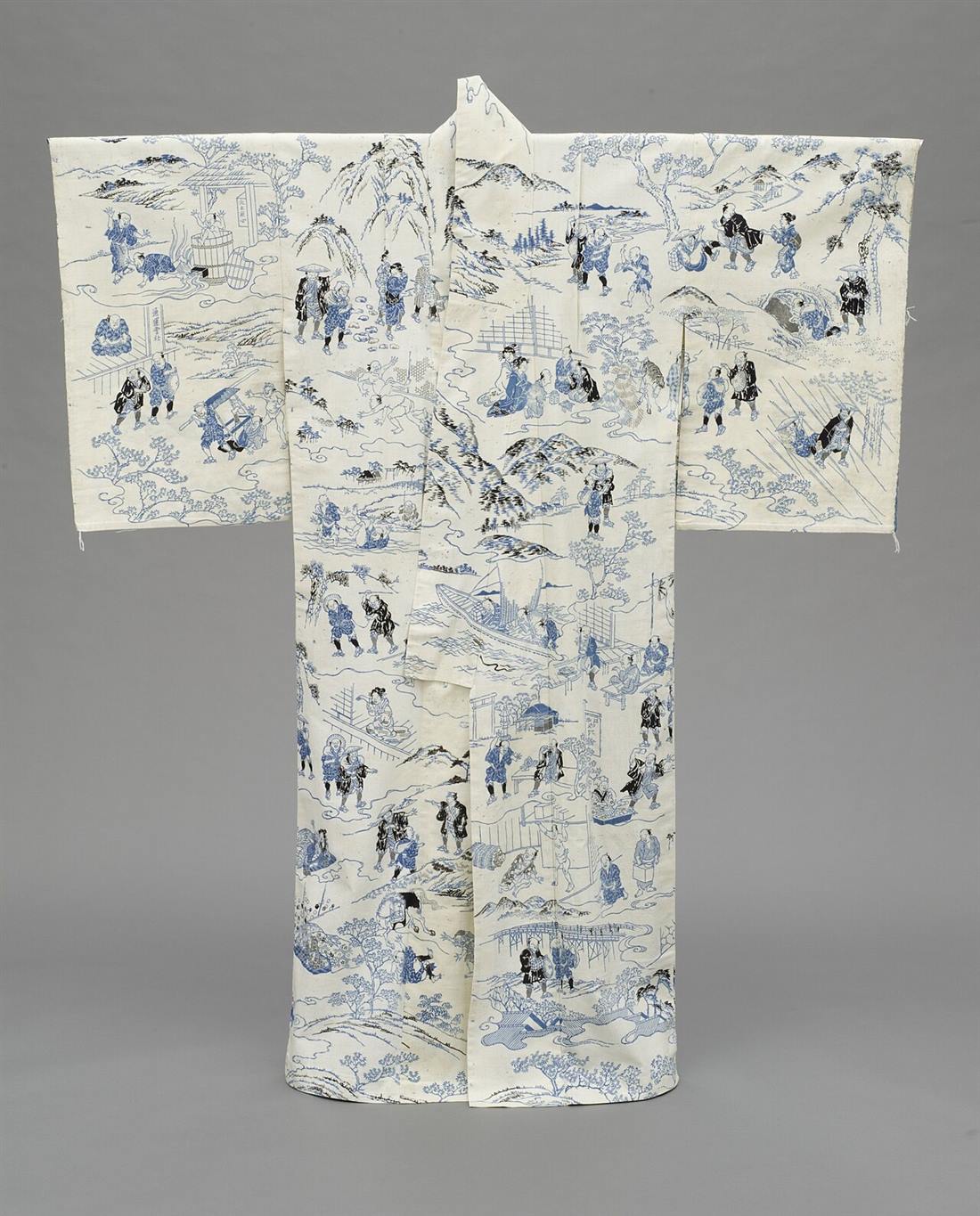
Files were resized. Furisode, LACMA, public domain. Yukata, LACMA, public domain.

