Age and status
There is no chart that says one robe at 28 and another at 45. Formal dress follows the occasion, and for the most formal women’s robes it follows marital status. Age enters because coming-of-age is around 20, so furisode is often linked to that year.
Children
Shichi-Go-San has its own robes. It is not the adult rental. Our published plans do not list a child price. Ask before you assume a small size is in the experience plan.
Young women, formal events
Coming-of-age, and a wedding attended as an unmarried guest, traditionally use furisode. The long sleeve is the marker. If you want that look for photographs, book it as furisode. The reference price starts at ¥9,800, tax included. It is not the ¥2,980 plan.
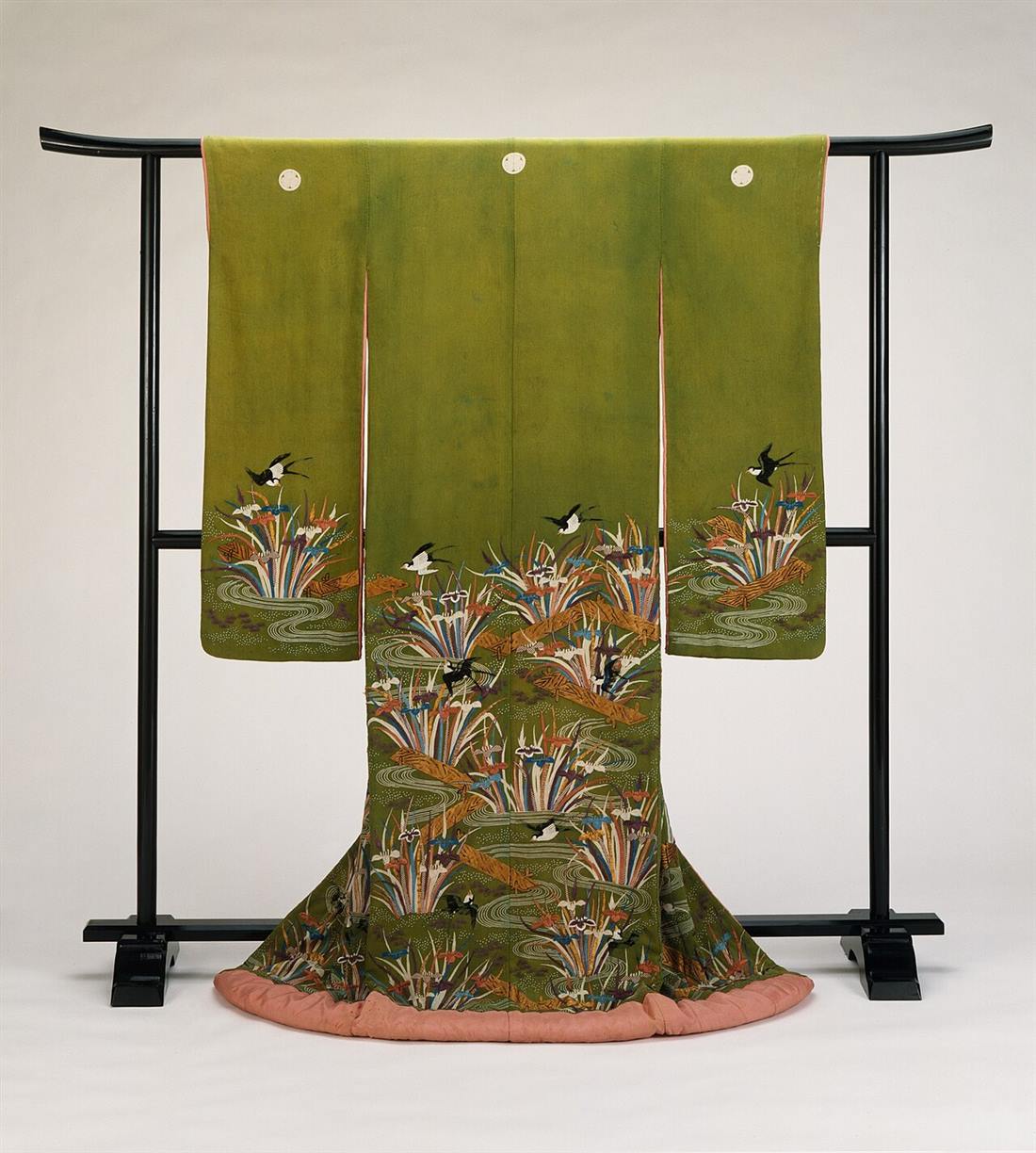
Married, formal events
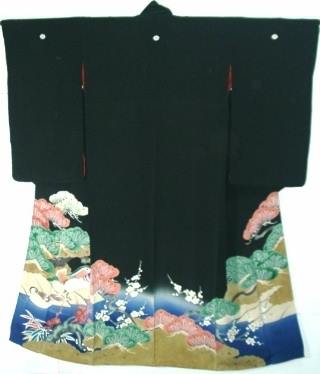
Kurotomesode is the most formal kimono for a married woman: five crests, pattern only on the hem. Irotomesode is a step wider. This is wedding dress, not a Gion walking outfit.
Walking, any adult age
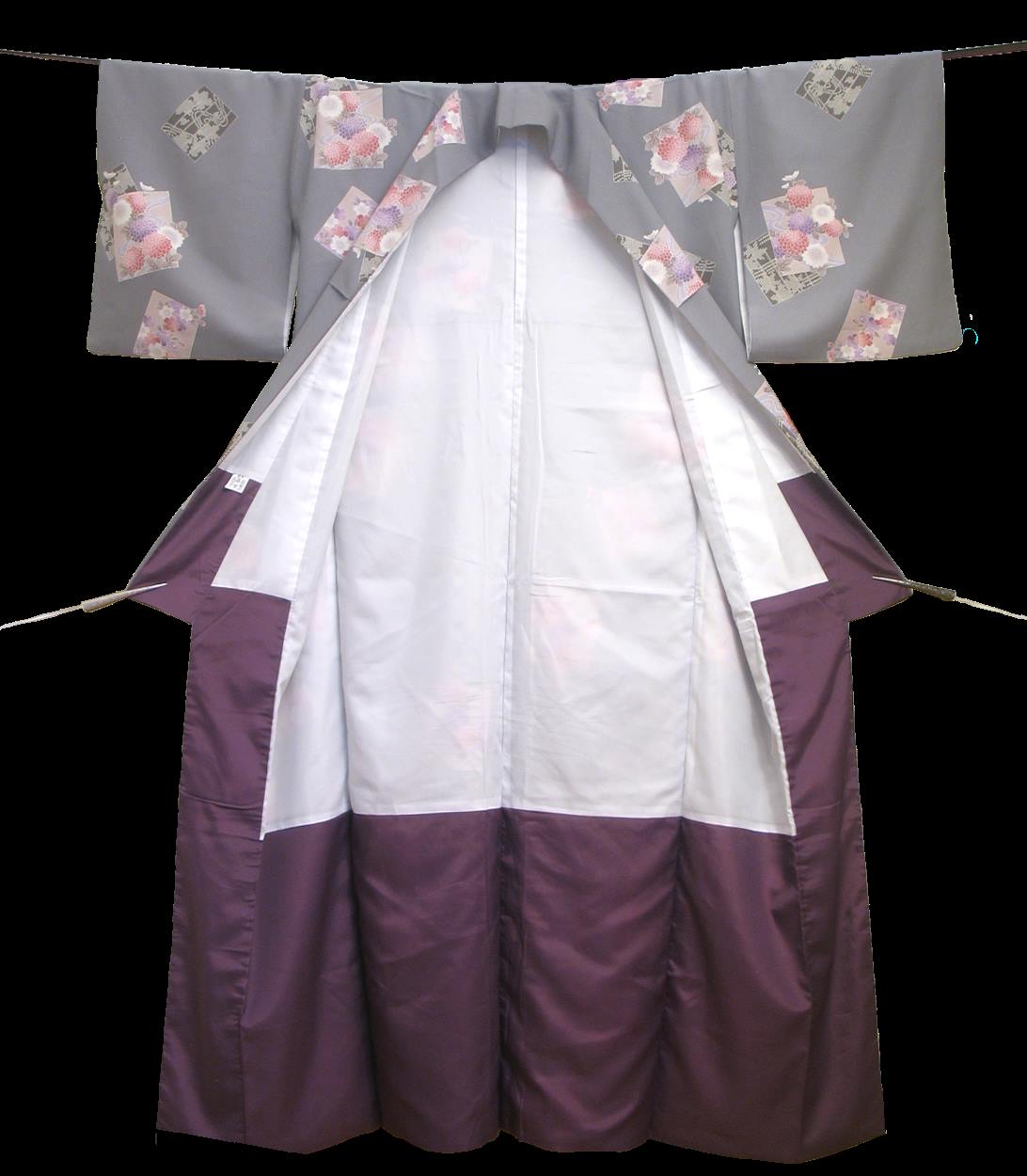
Komon and homongi are not gated by marital status. Older wearers have often chosen quieter colors. That is habit, not a shop rule. Summer yukata is not split by age either.
Men
An adult man of any age can walk in a kimono. Crests, haori and hakama are for formal events. There is no rule that youth must be bright and age must be grey.
Kyoto rental shops usually dress you for the picture you want. They do not ask for a marriage certificate. The status rules above are so furisode and kurotomesode are not swapped at a formal event. The ¥2,980 experience plan, tax included, is basic dressing, without photography and without hair.
Files were resized. Furisode, LACMA, public domain. Kurotomesode, Ichiro Wada, CC BY-SA 3.0. Komon, Pitke, CC BY-SA 3.0.


